

 English
 عربى
عربى
Home / News / Industry News / Air Seal Machinery: Rotary Valves for Pneumatic Conveying & Dust Collection
Industry News
Content
In bulk material handling, air seal machinery refers to equipment that prevents air leakage while allowing bulk solids to pass continuously between zones of different pressure. Engineers who design pneumatic conveying lines, dust collection systems, and silo discharge arrangements rely on rotary valves as the practical workhorse for this task. A rotary valve does more than meter material; it maintains system pressure, preserves conveying velocity, and minimizes the backflow of process air that could upset filter performance or dilute the conveyed product.
Changzhou Jinkui Machinery Manufacturing Co., Ltd. has focused on this niche since 2008. Based in Changzhou, Jiangsu Province, the company now offers eight rotary valve series and more than fifty models, serving industries such as petrochemical, power generation, environmental protection, food processing, pharmaceuticals, metallurgy, and construction, and exporting to more than twenty countries.
In bulk handling plants, the term air seal machinery is commonly used to describe devices whose primary function is to separate two air pressures while solids move through them. A rotary airlock is the classic example. Installed below a hopper, below a baghouse filter hopper, or at the inlet of a positive-pressure conveying line, it accepts material on one side and discharges it on the other while its rotor vanes act as a dynamic barrier against air flow.
The quality of this barrier has a direct impact on system performance. If the rotary valve allows excessive air slip, conveying velocity drops, material may salt out in the pipeline, and bag filters lose pulse-cleaning efficiency. A properly matched and well-maintained air seal, on the other hand, stabilizes pressure in the conveying line, reduces fan energy consumption, and protects sensitive process conditions.
A rotary valve creates an air seal through geometry and close clearance. The housing contains a cylindrical bore in which a rotor with vanes turns continuously. Each pocket formed by the vanes fills with material at the top; the material is carried around to the bottom; and the narrow gap between the vane tips and the bore keeps air leakage low.
Seal performance depends on the application. Mechanical seal round port rotary valves use spring-loaded sealing elements that maintain positive contact and reduce internal leakage, making them suitable for pressure-rated process service. Packing seal designs rely on compressed gland packing around the shaft for a simple, robust arrangement. In processes where powders are cohesive or tend to accumulate, air-swept round port valves introduce low-pressure air into the body to aid cleaning and prevent buildup.
For positive-pressure conveying, the rotary valve must feed material into a higher-pressure zone. Positive-pressure delivery rotary valves and standard outlet pipe rotary valves are engineered specifically for this duty, with rotor and seal arrangements that withstand continuous differential pressure.
Rotary air seal machinery covers several configurations, each developed around a specific process challenge: port shape, sealing method, material flow, or sanitation.
Round port designs are standard where the valve connects to circular piping or equipment nozzles. Mechanical-seal round port models combine compact dimensions with dependable pressure sealing.
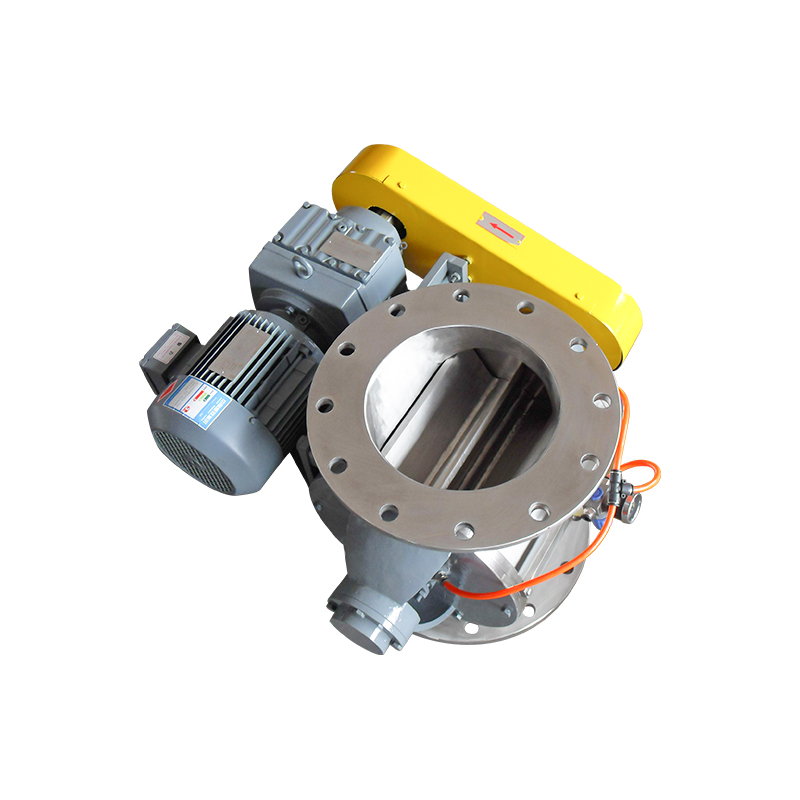
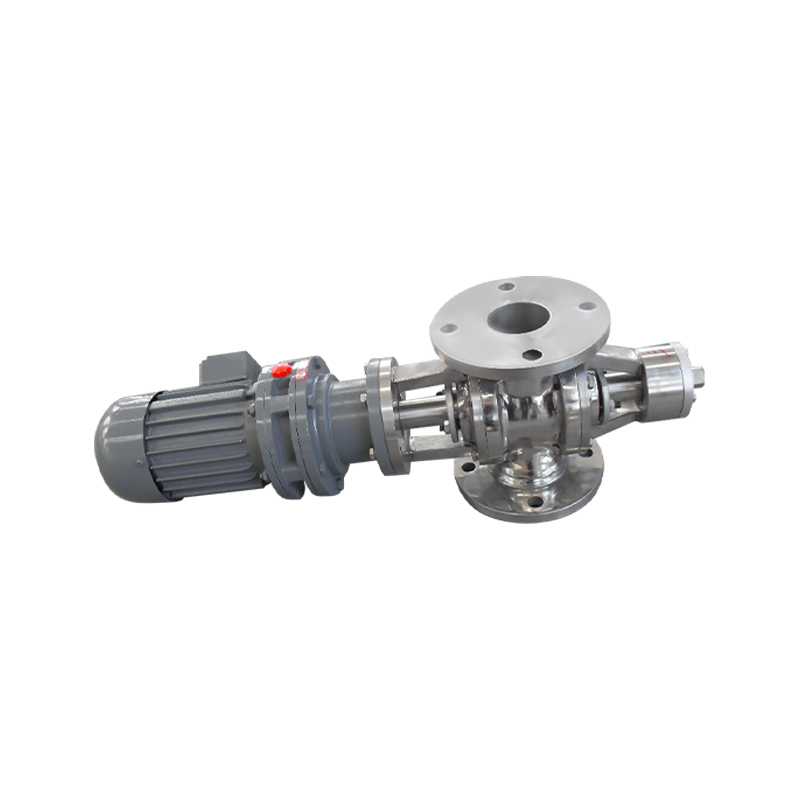 Mechanical Seal Round Port Rotary Valve for High-Pressure ServiceThis valve's mechanical seal at the shaft end prevents leakage and contamination, handling high pressure differentials and demanding materials such as toxic or explosive powders. Its round port matches circular piping, and double-face seals can accept isolation liquid for enhanced sealing.View Product →
For general service, packing seal versions provide economical performance, while air-swept models add purge air to keep the interior clean.
Square port rotary discharge valves match the square outlets commonly found on dust collector hoppers and silos. Mounting directly to the hopper flange removes the need for transition pieces and allows material to fall straight into the rotor pockets. Cast iron and ductile iron construction offers a balance of wear resistance and economy for continuous dust discharge duties. A closer look at how square port rotary valves improve material flow efficiency explains why this configuration is so common in dust collection systems.
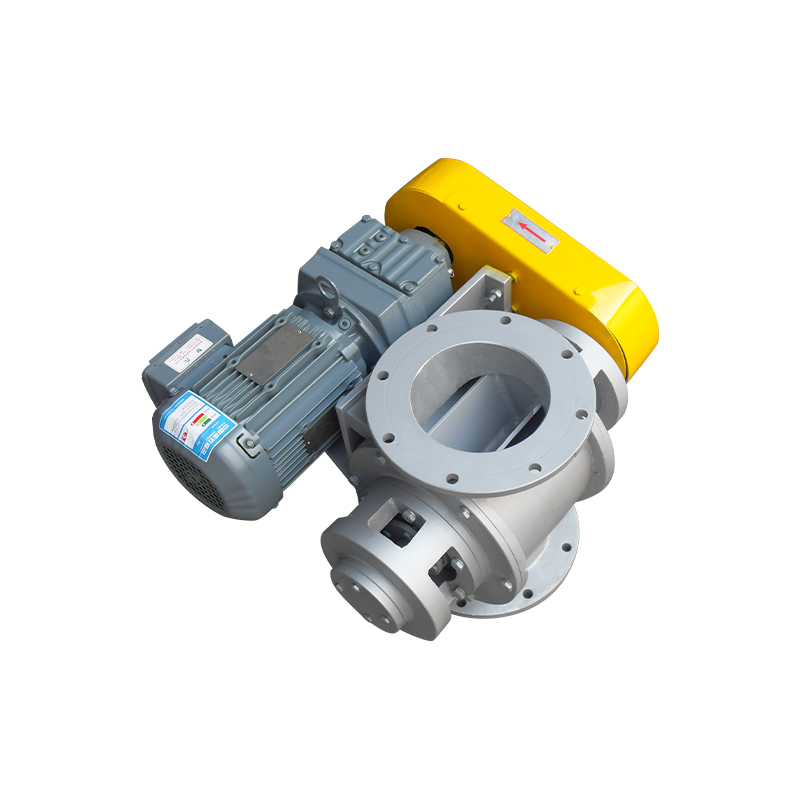
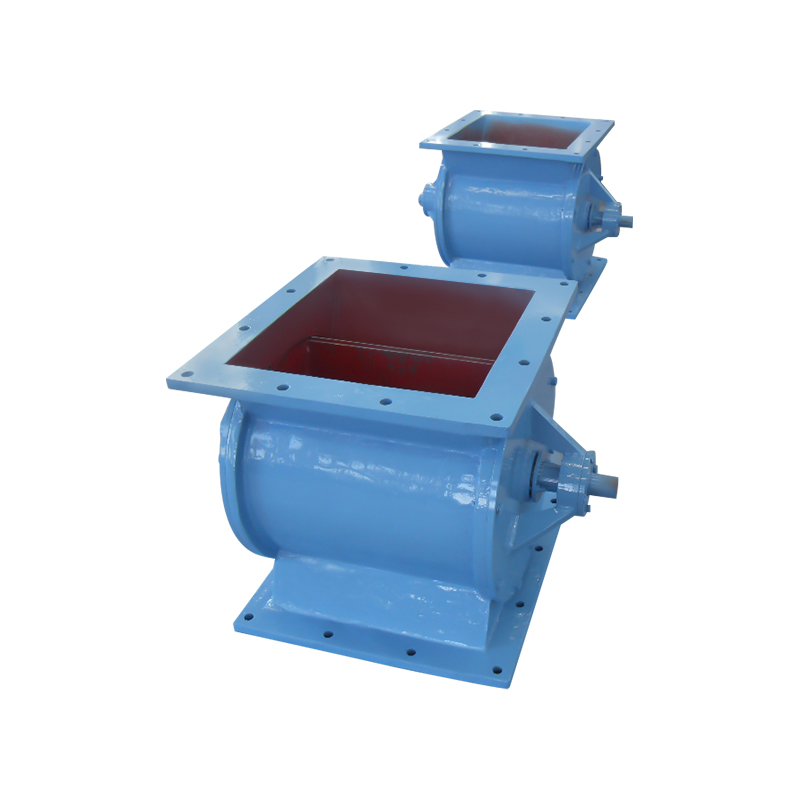 Cast Iron Square Port Rotary Discharge Valve for Dust HoppersDesigned to mount directly onto square hopper flanges, this cast iron or ductile iron valve provides wear resistance and economy for continuous dust discharge. Its sturdy construction suits cement, building materials, and other medium-wear industrial applications.View Product →
Materials with stringy fibers, coarse granules, or irregular particles can lodge between the rotor and housing in a conventional valve, causing jam-ups that interrupt production. Anti-jamming rotary valves counter this risk with structural changes such as offset inlet and outlet ports, which keep the material path clear; bayonet-style construction for fast access; and V-shaped rotors that alter the force applied to trapped particles.
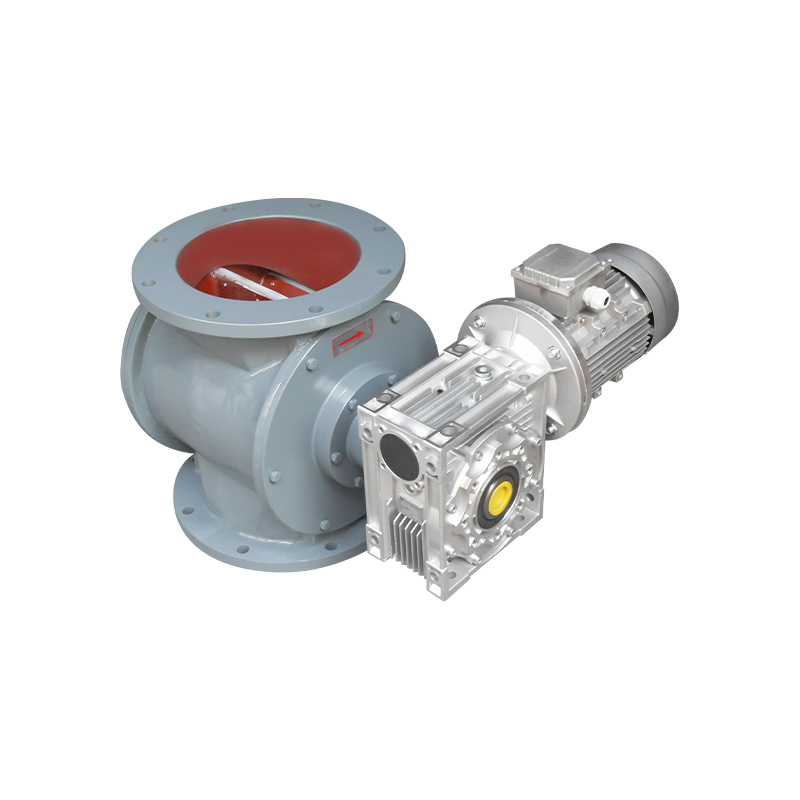
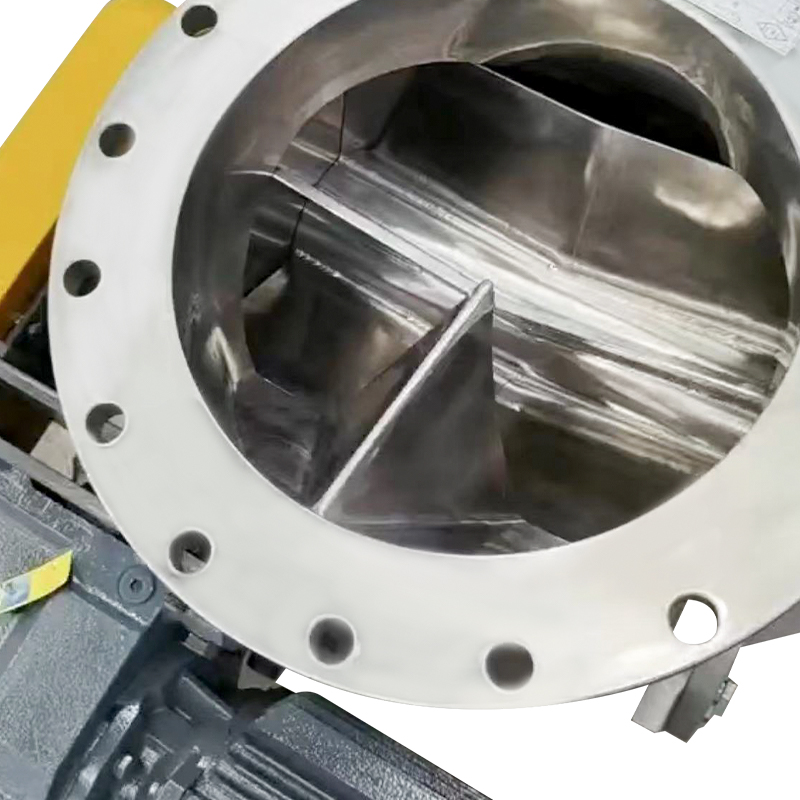 V-Rotor Anti-Stuck Rotary Valve for Cleaner Material FlowFeaturing a V-shaped rotor cavity that naturally releases foreign objects, this valve resists jamming from stringy fibers or coarse granules. Its wider opening allows particles up to one-third of the mouth width to pass, reducing maintenance and downtime in bulk handling systems.View Product →
In food, pharmaceutical, and specialty chemical plants, cleaning speed directly affects production time. Quick-opening fast-cleaning rotary valves allow the inlet plate to be opened without tools, while sliding rod pull-out models let an operator withdraw the entire rotor for thorough washdown.
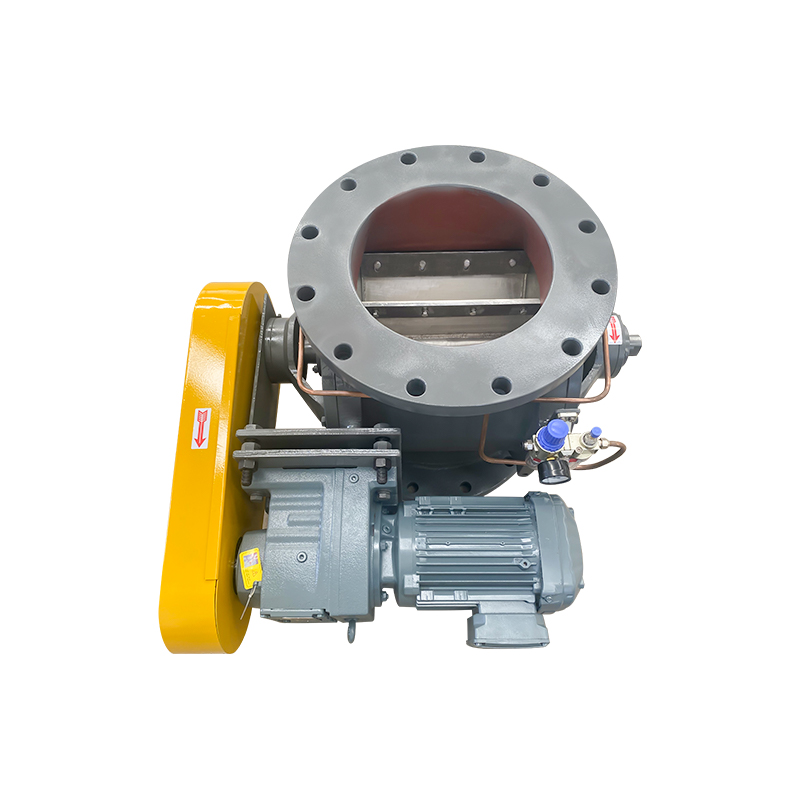
Positive-pressure delivery rotary valves serve both dense-phase and dilute-phase conveying systems. Customized solutions extend the product range to high-temperature processes, large throughput requirements, and abrasive materials through wear-resistant material designs.
| Series | Port shape | Primary advantage | Typical application |
|---|---|---|---|
| ZRO round port | Round | Multiple seal options | Pneumatic conveying, silo discharge |
| ZRF square port | Square | Direct hopper mounting | Baghouse dust discharge |
| ZRB anti-jamming | Round or offset | Blockage resistance | Stringy or coarse materials |
| ZKQ quick cleaning | Round | Fast disassembly for sanitation | Food and pharmaceutical plants |
| ZXQ positive pressure | Round | Feeds into high-pressure lines | Dense- and dilute-phase conveying |
Selecting air seal machinery begins with the material. Fine powders require tighter clearances and better sealing; abrasive materials call for hardened surfaces or ceramic protection; and sticky products benefit from air purge and anti-caking features.
Next, define the operating envelope. The pressure differential across the valve determines the required seal arrangement. Temperature affects material choice for the housing, rotor, bearings, and seals. Duty cycle and batch-change frequency point toward quick-cleaning construction.
Rotary air seal machinery appears wherever powders and granules are moved in bulk. The table below maps typical industry needs to the most suitable valve series.
| Industry | Typical material | Common valve series |
|---|---|---|
| Petrochemical | Catalysts, additives, polymer pellets | ZRO, ZXQ |
| Power generation | Fly ash, coal powder | ZRF, custom wear-resistant |
| Environmental protection | Dust, filter cake | ZRF, ZRO with air purge |
| Food processing | Flour, sugar, starch | ZKQ, stainless steel ZRF |
| Pharmaceutical | Active ingredients, excipients | ZKQ, stainless steel ZRO |
| Metallurgy | Ore powders, slag dust | Custom high-temperature, wear-resistant |
| Construction materials | Cement, gypsum, mineral fillers | ZRF, ZRB |
Air seal machinery performs at its best when the running clearance between the rotor tip and the housing is maintained. Regular inspections should cover rotor tip wear, seal elements, and drive alignment. As vanes wear, air slip increases and conveying efficiency falls, so reconditioning or replacing the rotor is an economical way to restore original performance.
In abrasive industries, wear-resistant materials extend service intervals dramatically. In moist or corrosive atmospheres, corrosion-resistant finishes protect the valve body. And for hygienic applications, the tool-free access of quick-cleaning rotary valves turns a full sanitation routine into a short planned operation.
Air seal machinery is not a single product category; it is the system capability that keeps bulk solids processes stable, energy-efficient, and safe. By understanding the role of the rotary valve as an air seal, process engineers can select the right series, sealing arrangement, and materials for their specific operating conditions. With a full range of round port, square port, anti-jamming, quick-cleaning, and positive-pressure rotary valves, plus custom engineering for high-temperature and abrasive service, Changzhou Jinkui Machinery Manufacturing Co., Ltd. provides a dependable reference point for plants that need a durable, efficient air seal. Visit our homepage to view the complete product range.