

 English
 عربى
عربى
Home / News / Industry News / What Makes a Mechanical Seal Round Port Rotary Valve the Right Choice for Your Process?
Industry News
Content
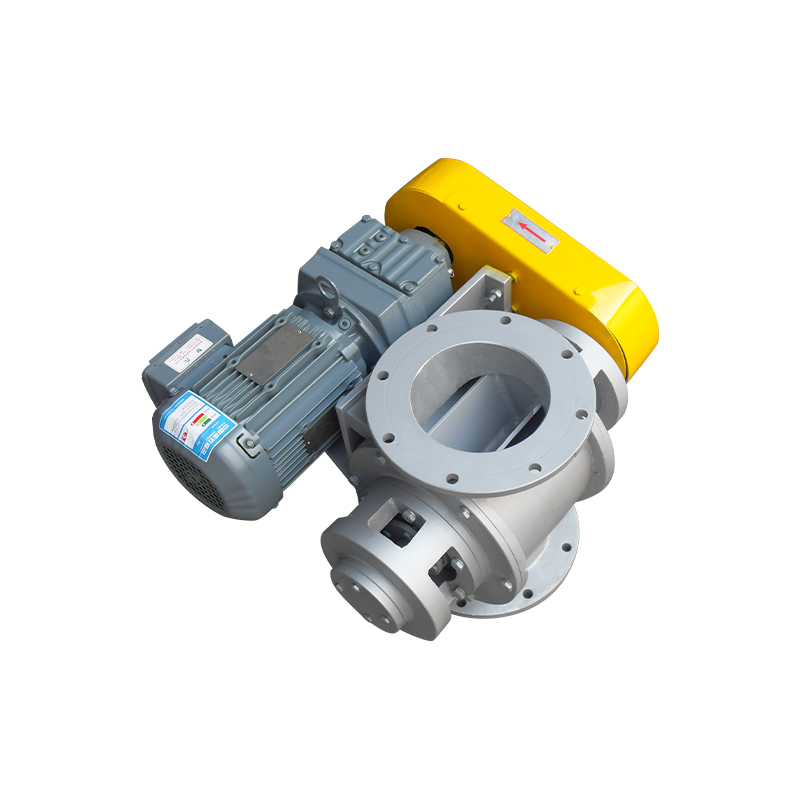
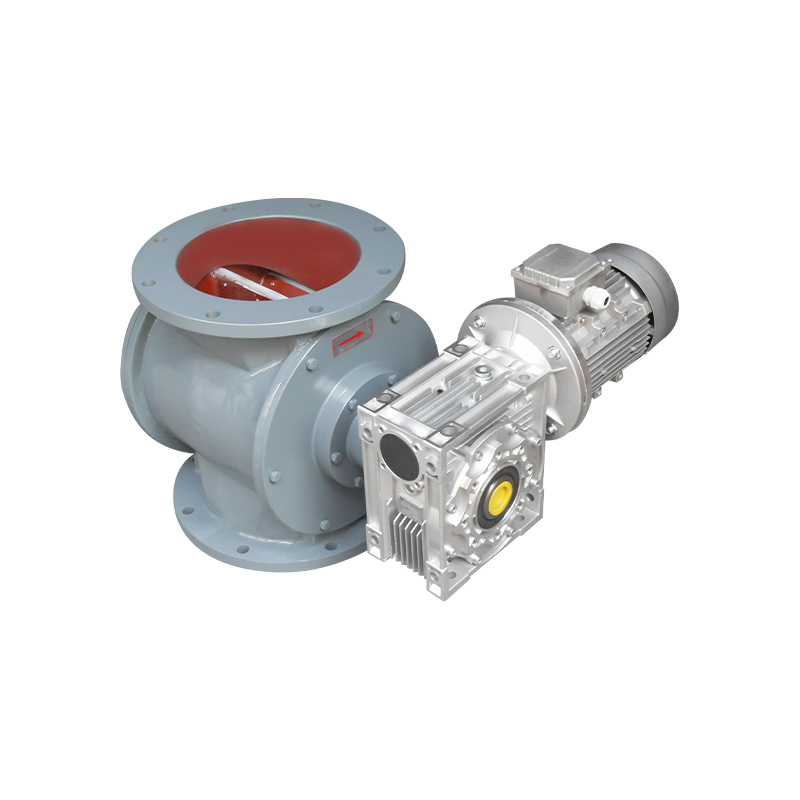
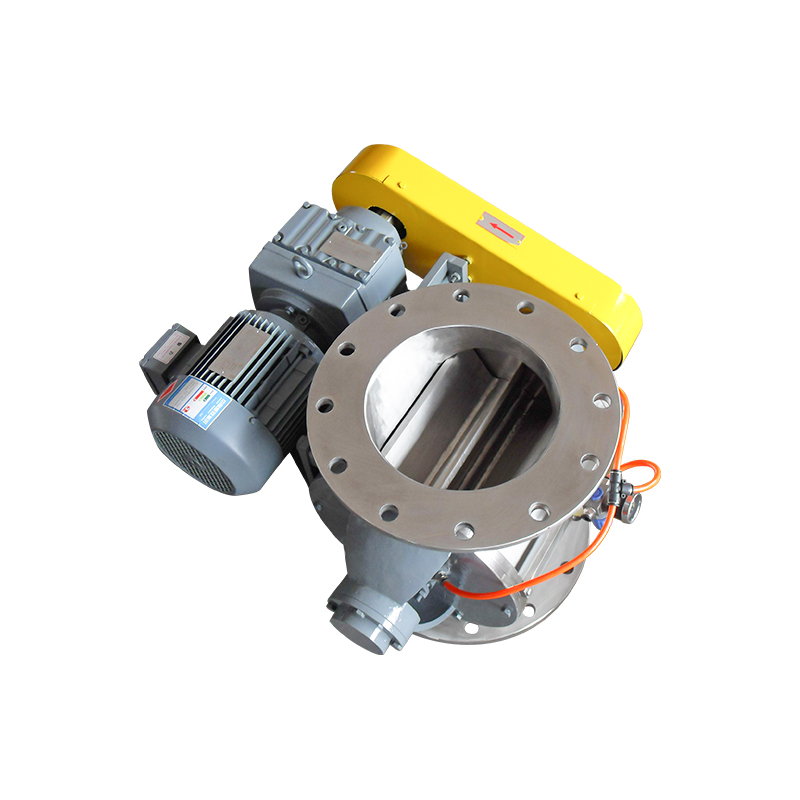
In bulk material handling and pneumatic conveying systems, the rotary valve is a workhorse component — but not all rotary valves are built the same. When process conditions demand reliable sealing, precise metering of fine or abrasive materials, and consistent performance under pressure differentials, the mechanical seal round port rotary valve stands out as a purpose-engineered solution. Understanding its design, how it differs from standard rotary valves, and where it performs best is essential for engineers and procurement professionals selecting equipment for demanding applications.
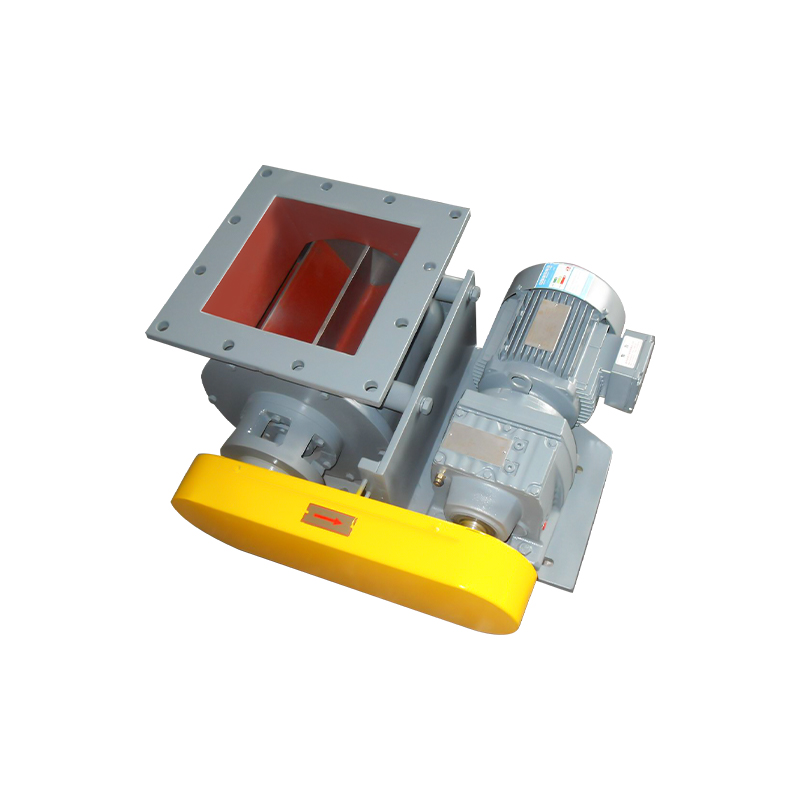
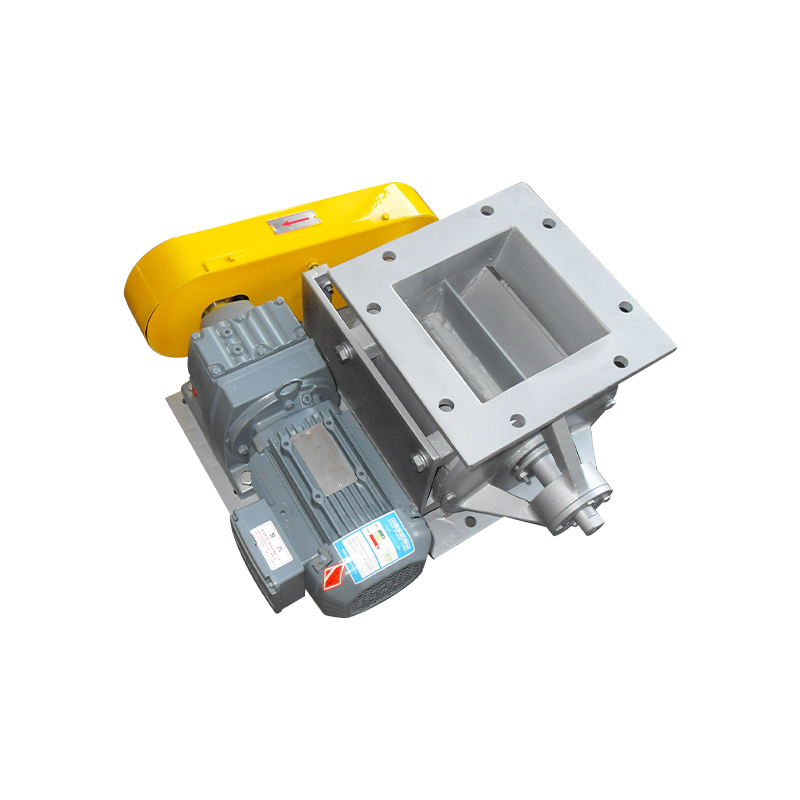
A rotary valve — also called a rotary airlock feeder or rotary airlock valve — is a device used to meter bulk solids into or out of a process while maintaining an air seal between zones of different pressure. The rotor, which consists of a series of vanes or pockets arranged around a central shaft, turns continuously inside a cylindrical housing, filling each pocket with material at the inlet and discharging it at the outlet as the rotor rotates.
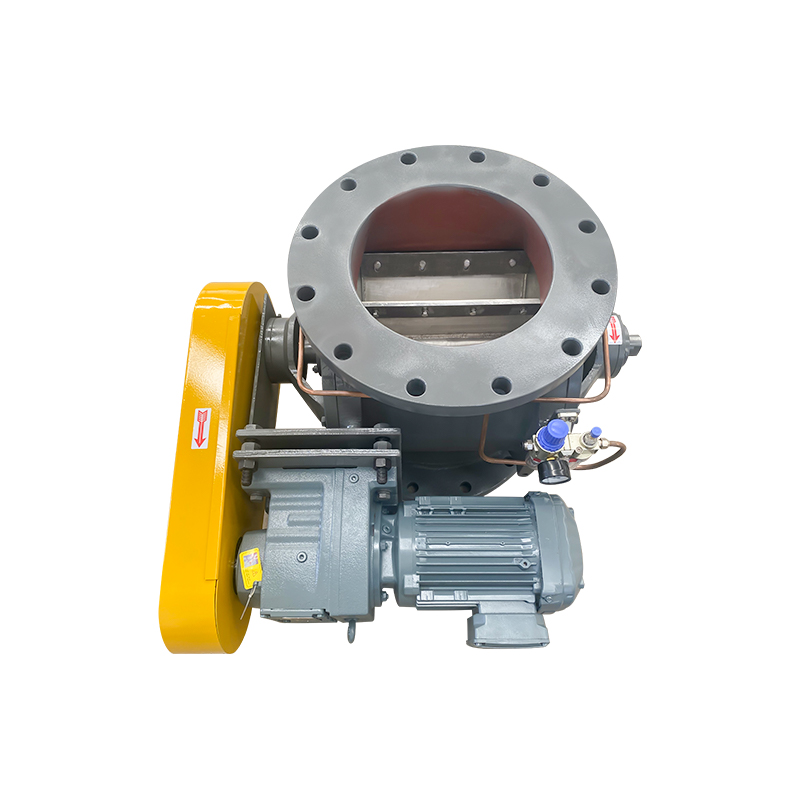
The round port variant specifically features a circular inlet and outlet opening rather than the square or rectangular ports found on standard rotary valves. This round port geometry is not merely aesthetic — it fundamentally changes how material enters the rotor pockets, how evenly the pockets fill, and how well the valve integrates with round pipe or tube connections that are common in pneumatic conveying lines.
The mechanical seal designation refers to the sealing system employed on the rotor shaft ends where the shaft exits the housing. Instead of conventional packing glands or simple lip seals, a mechanical seal uses precision-machined mating faces — typically a rotating seal face fixed to the shaft and a stationary seat in the housing — held in contact by spring pressure. This arrangement creates a low-leakage, low-maintenance seal capable of withstanding higher pressures and operating in environments where contamination from shaft packing cannot be tolerated.
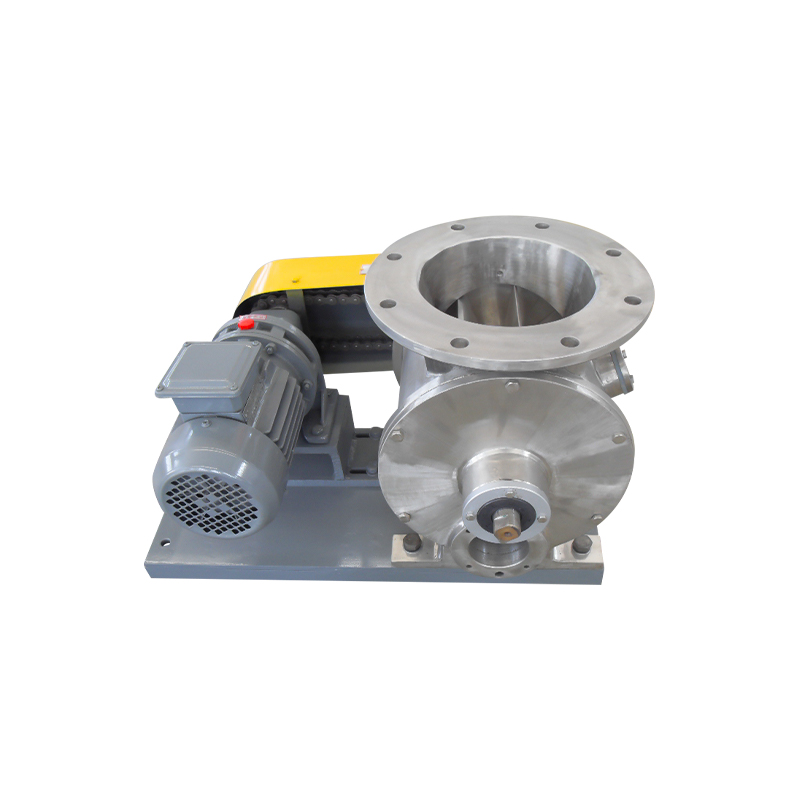
The geometry of the port opening has a direct and measurable effect on how efficiently a rotary valve handles bulk materials. Standard square or rectangular ports create corners where material can bridge, pack, or flow unevenly into rotor pockets. In contrast, the round port design eliminates corners entirely, producing a smooth, symmetrical opening that promotes uniform material flow across the full diameter of the inlet.
For cohesive or fine powders — such as pharmaceutical actives, food starches, pigments, or titanium dioxide — the tendency to arch or bridge across a rectangular inlet is a known operational problem. Round ports reduce this risk by removing the flat edges where arching typically initiates. The material column above the valve distributes its weight evenly around the circular opening, and the rotor pockets fill more consistently from one revolution to the next, improving metering accuracy.
Round ports also allow the valve to connect directly to round pipe flanges without transition pieces. In pneumatic conveying systems, every transition fitting adds turbulence, pressure drop, and a potential wear point. Eliminating these transitions by specifying a round port valve that matches the conveying line diameter directly simplifies the system design and reduces installation cost.
Shaft sealing is one of the most maintenance-intensive aspects of conventional rotary valve operation. Packing glands — which use compressed rope-like packing material around the shaft — require periodic retightening as packing compresses over time, and they inevitably leak fine material along the shaft if not carefully maintained. In sanitary applications or where the process material is hazardous or expensive, even minor shaft leakage is unacceptable.
Mechanical seals address these limitations directly. The sealing faces, typically made from silicon carbide, tungsten carbide, or ceramic paired against carbon graphite, create a lapped-flat interface with a leak path measured in microns. The spring-loaded design maintains constant face contact even as components wear, without requiring operator adjustment. This translates into significantly extended service intervals and more predictable maintenance scheduling.
In pressurized pneumatic conveying applications, where the valve must isolate an upstream vessel or hopper operating at atmospheric pressure from a conveying line under positive pressure, shaft seal integrity is directly tied to system efficiency. Air leaking backward through shaft packing disturbs the pressure balance across the rotor, reducing effective airlock capacity and potentially causing material to flow backward or blow back into upstream equipment. A mechanical seal eliminates this pathway, maintaining the intended pressure differential reliably across the full operating life of the seal faces.
When specifying or comparing mechanical seal round port rotary valves, several construction details significantly affect performance, reliability, and total cost of ownership. The following features deserve careful evaluation:
The mechanical seal round port rotary valve finds application across a wide range of industries where its combination of accurate metering, reliable air sealing, and low-maintenance shaft sealing delivers measurable operational value.
In pharmaceutical powder handling, containment and product purity are paramount. Mechanical seals prevent active pharmaceutical ingredients (APIs) from migrating along the shaft and contaminating adjacent equipment or the working environment. Round port designs integrate cleanly with contained transfer systems and isolators. Stainless steel construction with electropolished surfaces meets cGMP requirements, and many designs are available with FDA-compliant elastomers and full material traceability documentation.
Flour, sugar, starch, milk powder, coffee, and spice processing all use rotary valves extensively in pneumatic conveying lines connecting silos, mixers, and packaging machines. Round port valves connect directly to round tube convey lines without reducers, maintaining hygienic design standards. Mechanical seals allow the valve housing to be washed down or CIP (cleaned in place) without risk of contamination through the shaft seal path. Quick-release rotor designs enable rapid disassembly for inspection or deep cleaning during scheduled changeovers.
Plastic pellets, polymer powders, carbon black, titanium dioxide, and specialty chemical powders present challenges of abrasion, fine particle sealing, and in some cases toxicity. The mechanical seal prevents hazardous material from exiting the valve along the shaft, protecting operators and meeting environmental containment requirements. Hard-faced rotors and housing liners in chrome or tungsten carbide extend service life in highly abrasive carbon black or mineral powder service.
Fly ash handling at power plants, biomass feeding to boilers, and lime dosing in flue gas desulfurization (FGD) systems all use rotary valves under challenging conditions of high temperature, pressure differentials, and abrasive materials. Mechanical seal designs with high-temperature elastomers and ceramic seal faces handle these conditions reliably, reducing the frequent repacking that conventional shaft seals require in these environments.
Proper sizing of a mechanical seal round port rotary valve requires matching the valve's volumetric capacity to the required material throughput while operating at a rotor speed that balances filling efficiency against wear and particle attrition. The following parameters are the starting point for any sizing calculation:
| Parameter | Typical Range | Impact on Selection |
| Rotor Speed | 6 – 30 RPM | Higher speeds increase capacity but reduce pocket fill efficiency and increase wear |
| Pocket Fill Factor | 50% – 80% | Depends on material flowability; cohesive powders fill less completely |
| Pressure Differential | Up to 15 PSI typical | Higher differentials require tighter tip clearances and more robust seals |
| Material Bulk Density | Varies widely | Converts volumetric flow rate to mass throughput for process requirements |
| Temperature | Up to 400°F standard | Affects elastomer and seal face material selection |
Most manufacturers publish volumetric capacity charts for each valve size at various rotor speeds, expressed in cubic feet per hour or liters per hour. To find the required valve size, divide the desired mass throughput by the material bulk density to get the required volumetric flow rate, then select a valve and speed combination from the chart that meets or modestly exceeds this value. Operating a valve at 70–80% of its rated maximum capacity provides a buffer for density variations and ensures the rotor does not become overloaded during surge conditions.
Even though mechanical seals require less routine attention than packing glands, they do require correct installation and periodic inspection to achieve their full service life potential. When replacing mechanical seals, seal faces must be installed without contamination from oils, fingerprints, or abrasive particles on the lapped sealing surfaces. A thin film of clean process-compatible lubricant on the elastomeric secondary seal helps seat the seal without tearing the O-ring during assembly. Face contact should never be forced; the spring load provides all the necessary seating force.
Rotor tip clearance should be checked during annual maintenance by measuring the housing bore and rotor tip diameter with inside and outside micrometers. When clearance has grown beyond the manufacturer's specified maximum — typically 0.015 to 0.025 inches for standard service — airlock performance will have degraded noticeably and rotor replacement or housing relining should be scheduled. Keeping accurate records of clearance measurements over time enables predictive maintenance planning rather than reactive breakdown response, which is the most cost-effective approach to managing rotary valve assets in continuous production environments.