

 English
 عربى
عربى
Home / News / Industry News / Quick Cleaning Rotary Valves: Why Hygienic Design Is Non-Negotiable in Modern Processing
Industry News
Content
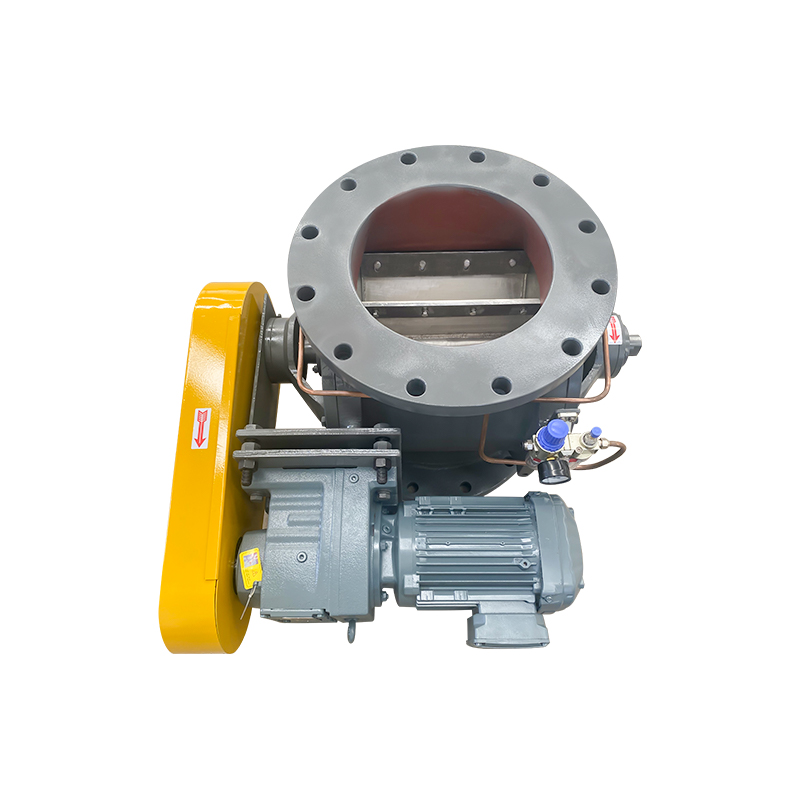
Quick cleaning rotary valves — also called easy-clean rotary airlocks or hygienic rotary valves — are a specialized category of rotary airlock feeder designed to be disassembled, cleaned, inspected, and reassembled rapidly without the use of special tools and without removing the valve housing from the process pipeline. In standard industrial rotary valve designs, thorough cleaning requires extensive dismantling, often involving the removal of multiple fastened components, the complete extraction of the rotor assembly, and reassembly procedures that demand skilled mechanical technicians and significant downtime. Quick cleaning designs eliminate most of these steps through engineered tool-free or minimal-tool disassembly systems that allow the rotor to be withdrawn, cleaned, and returned to service in a fraction of the time required by conventional designs.
The industries where quick cleaning rotary valves are most critical — food processing, pharmaceutical manufacturing, nutraceuticals, dairy, confectionery, and fine chemical production — are precisely those where cross-contamination between product batches, microbial growth in retained product residues, and incomplete cleaning validation represent genuine safety, regulatory, and commercial risks. In these environments, the cleaning cycle is not an optional maintenance event — it is a regulatory requirement between every product changeover, and in many cases at defined intervals within a single production run. A valve that cannot be cleaned quickly, thoroughly, and verifiably will become the bottleneck that limits production flexibility and throughput on an otherwise well-designed processing line.
To appreciate what a quick cleaning rotary valve offers, it is useful to understand what makes standard rotary airlock valves difficult to clean. A conventional rotary airlock consists of a cast housing with inlet and outlet flanges, a rotor assembly of typically 8 to 12 vanes mounted on a central shaft, end plates bolted to both sides of the housing, shaft seals, and a drive assembly attached to one end of the shaft. Cleaning this assembly thoroughly requires unbolting the end plates, extracting the rotor by sliding it axially out of the housing — which requires clearance space on the drive side or the non-drive side — cleaning every pocket, vane tip, shaft seal recess, and housing bore surface individually, and then reassembling all components in the correct sequence and torquing all fasteners to specification. On a typical food-grade conventional rotary valve, this process takes 45 minutes to 2 hours per valve, depending on product residue characteristics and the number of valves in the line.
Quick cleaning rotary valves address this through several design innovations that work together to minimize disassembly time, improve access to all product-contact surfaces, and reduce the reassembly skill and effort required. The most significant of these design features are described in the sections below, but the common thread across all quick cleaning designs is that the rotor must be removable quickly and completely from the housing, all product-contact surfaces must be accessible for direct inspection and manual or CIP cleaning, and reassembly must be achievable correctly and consistently by production operators without specialist mechanical skills.
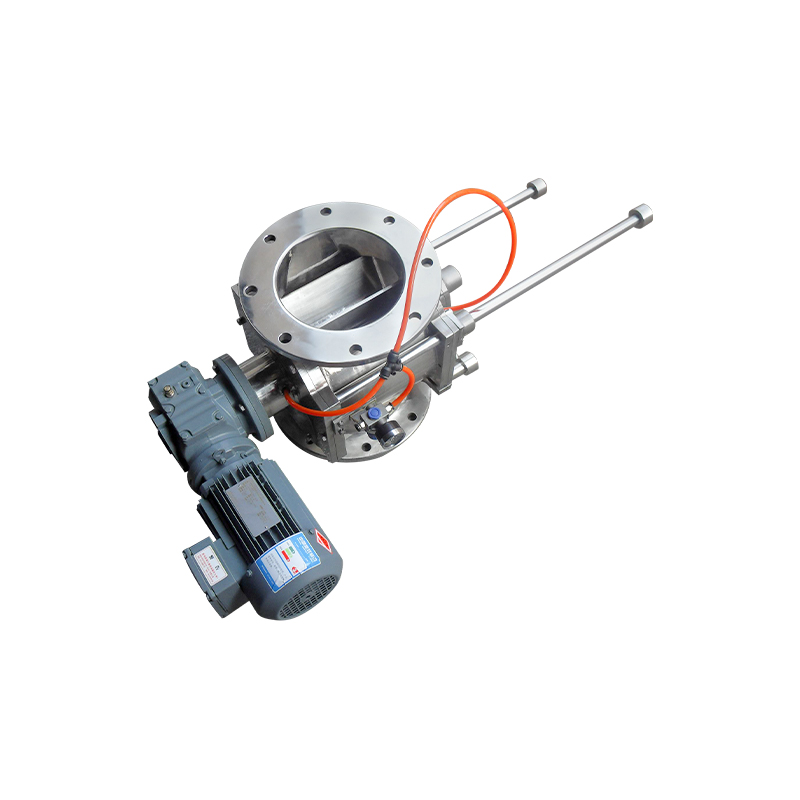
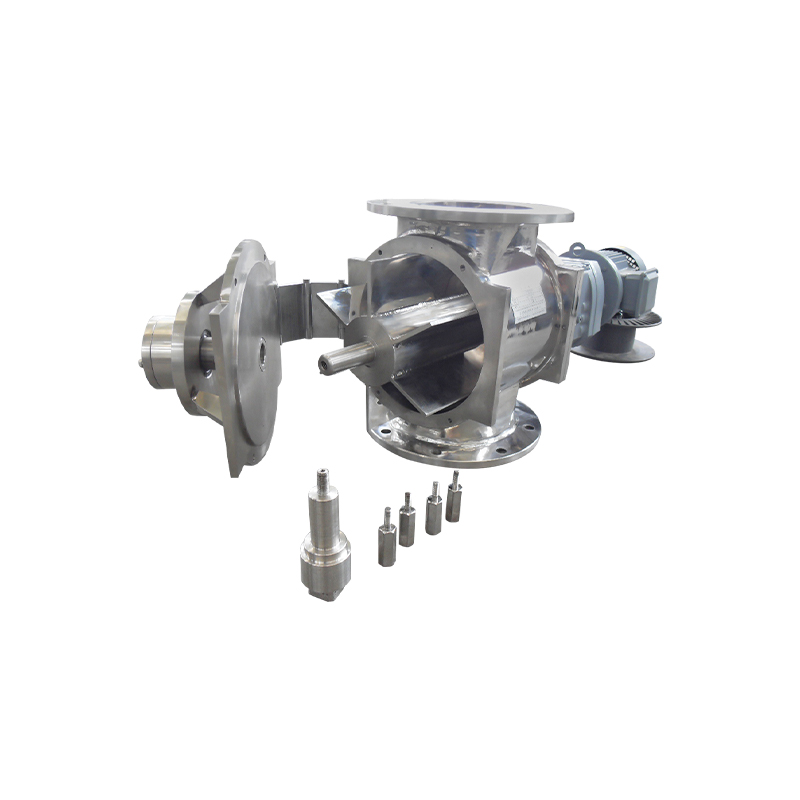
The defining feature of a quick cleaning rotary valve is the ability to remove the rotor assembly without dismantling the housing from the process pipeline and without conventional bolted fasteners. This is typically achieved through one of three mechanisms: a swing-out end plate that pivots on a hinge when a single locking handle is released, a sliding end plate retained by quick-release clamps rather than bolts, or a drop-out bottom plate design that allows the rotor to be lowered vertically out of the housing. In all three cases, the rotor can be extracted in under five minutes by a single operator without tools or with only a single hand-operable locking device. This single design change reduces cleaning downtime by 60 to 80% compared to conventional bolted designs on the same valve size.
The rotor pocket geometry in hygienic rotary valves is specifically engineered to minimize product retention and maximize cleanability. Open-pocket rotors — with wide, shallow, radiused pockets rather than the deep, narrow pockets typical of high-capacity industrial valves — provide direct access to all pocket surfaces for manual cleaning tools and CIP spray balls. Radiused internal corners rather than sharp angles eliminate the crevices where product powder and microbial biofilm accumulate in conventional designs. Polished stainless steel surfaces with a defined maximum roughness (Ra ≤ 0.8 µm is the standard for pharmaceutical applications, Ra ≤ 1.6 µm for food applications) further reduce product adhesion and facilitate complete cleaning with standard aqueous cleaning agents.
Vane tip seals — the flexible elements at the outer edge of each rotor vane that contact the housing bore to maintain the airlock seal — are a common site of product accumulation and microbial growth in conventional rotary valves. In quick cleaning designs, vane tips are made removable without tools, allowing them to be individually inspected and cleaned or replaced during each cleaning cycle. Some designs use a single-piece elastomeric tip that clips onto the vane without adhesive or fasteners, enabling one-person removal and replacement in seconds per vane. Material selection for removable vane tips in food and pharmaceutical applications is typically EPDM, silicone, or PTFE, all of which offer the required chemical resistance to cleaning agents and compliance with FDA 21 CFR or EU food contact material regulations.
Shaft seals are among the most problematic areas in rotary valve hygiene because they represent a point where the rotor shaft penetrates the housing end plate, creating an annular gap between rotating and stationary components that is inherently difficult to clean and prone to product ingress and microbial colonization. Quick cleaning valves address this through hygienic lip seal arrangements that are removable with the end plate assembly, inflatable shaft seals that collapse when deflated to allow easy rotor withdrawal, or complete elimination of product-side shaft seals through extended rotor shaft designs that keep the sealing elements outside the product zone. All seal configurations must be documented with material compliance certificates and validated for the cleaning agents and temperatures used in the specific application.
Quick cleaning rotary valves are available in two fundamentally different cleaning configurations — manual disassembly and clean (sometimes called "clean-out-of-place" or COP), and true clean-in-place (CIP) designs — and understanding the distinction is critical when specifying a valve for a hygienic processing application.
In a COP configuration, the valve's quick-release mechanism allows the rotor to be removed rapidly and taken to a dedicated cleaning station where it is washed, sanitized, rinsed, and dried before being returned to the valve housing and the production line restarted. The housing remains in the pipeline during cleaning and is typically flushed with cleaning solution via the product inlet. COP is practical for batch manufacturing environments with multiple product changeovers per shift, where operators can manage a cleaning rotation across several valves simultaneously. The key advantage of COP is that it guarantees direct physical access to all surfaces for inspection — something that CIP processes cannot inherently provide.
True CIP-compatible rotary valves are designed so that the valve remains assembled and in line while cleaning fluids are circulated through it at defined temperature, concentration, flow rate, and contact time parameters validated to achieve the required log reduction in microbial contamination. CIP compatibility requires specific design features including spray nozzles or spray balls integrated into the housing to ensure full wetting of all internal surfaces, smooth bore geometry with no dead legs or blind spots where cleaning fluid cannot reach, and materials throughout that are compatible with the CIP chemistry — typically caustic (NaOH) wash, acid rinse, and hot water sanitization cycles. CIP designs are preferred in continuous manufacturing environments and in applications where minimum production downtime is the primary operational priority.
The operational and compliance benefits of quick cleaning rotary valves are most pronounced in industries where allergen management, cross-contamination prevention, and cleaning validation are active regulatory requirements. The following application sectors represent the primary markets for hygienic rotary valve technology.
When evaluating quick cleaning rotary valve models from different manufacturers, the following specification parameters provide the most reliable basis for comparison and for assessing fitness for purpose in a specific application.
| Specification Parameter | Typical Range / Standard | Why It Matters |
| Rotor removal time | 2 – 10 minutes | Direct impact on cleaning downtime per changeover |
| Internal surface finish (Ra) | Ra ≤ 0.8 µm (pharma) / ≤ 1.6 µm (food) | Reduces product adhesion and biofilm formation |
| Housing material | 316L stainless steel standard | 316L offers superior corrosion resistance vs 304 |
| Seal material options | EPDM, silicone, PTFE, Viton | Must match CIP chemistry and product type |
| Cleaning method compatibility | COP, CIP, or both | Must align with facility cleaning protocol |
| ATEX / dust explosion rating | ATEX Zone 21/22 where required | Mandatory for combustible powder handling |
| Compliance certifications | FDA, EC 1935/2004, EHEDG, 3-A | Confirms hygienic design standard compliance |
EHEDG (European Hygienic Engineering and Design Group) certification is the most rigorous third-party validation of hygienic design quality for rotary valves used in food and pharmaceutical applications. EHEDG-certified valves have been independently tested for cleanability using standardized soil challenge protocols, and their design has been assessed against the EHEDG hygienic design principles. Specifying EHEDG certification reduces the validation burden on the end user and provides defensible documentation for food safety management system audits. 3-A Sanitary Standards certification serves an equivalent role for North American dairy and food processing applications.
Even the best-designed quick cleaning rotary valve will underperform its potential if it is not operated, cleaned, and maintained according to procedures that take advantage of its design features. The following practices reflect the operational experience of food and pharmaceutical manufacturers who have maximized the value of hygienic rotary valve technology in production environments.
Quick cleaning rotary valves represent a mature but continually evolving technology that directly enables the production flexibility, cleaning compliance, and food safety standards demanded by modern hygienic processing operations. The investment premium over standard industrial rotary airlock valves is typically recovered within the first year of operation through reduced cleaning downtime alone — before accounting for the regulatory compliance value and the risk reduction associated with validated, reproducible cleaning in allergen-managed and microbiologically controlled manufacturing environments.