

 English
 عربى
عربى
Home / News / Industry News / Anti Jamming Rotary Valve: Design, Selection, and Maintenance Guide for Powder Handling
Industry News
Content
Few events stop a powder handling line faster than a rotary valve that seizes solid. Material bridges above the rotor, the drive trips on overload, and the conveying or dust collection system backs up behind it. An anti jamming rotary valve is not a single invention. It is a set of decisions about rotor geometry, inlet position, clearances, sealing and surface finish that work together to keep material moving. We have been manufacturing rotary valves in Changzhou since 2008, and the valves that cause the fewest problems on site are rarely the most complicated ones. They are the ones that were matched honestly to the material and the process they serve.
Jamming almost always traces back to one of four causes, and identifying which one you are dealing with usually points towards the right design before you open a single catalogue page.
In our experience, most jamming complaints turn out to be a mix of the first and the fourth. A material that bridges a little begins to enter the pockets unevenly, the valve runs at higher torque, and eventually the drive protection trips. Anti jamming design, in other words, is really about removing the places where material can sit still.
Manufacturers describe anti jamming rotary valves in different ways, but most practical solutions fall into three families. They can be combined, and on difficult duties they often are.
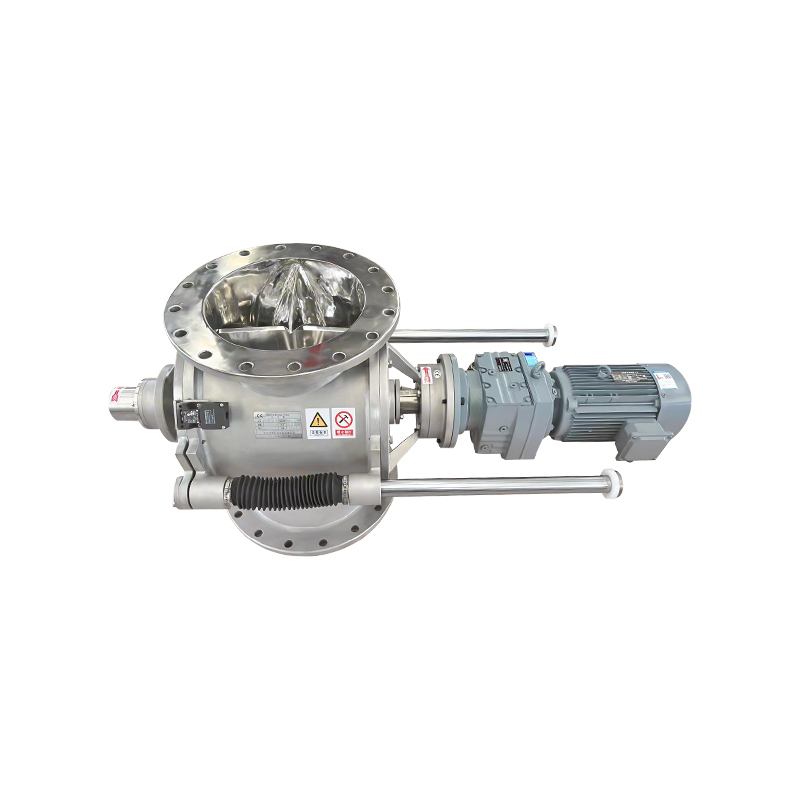
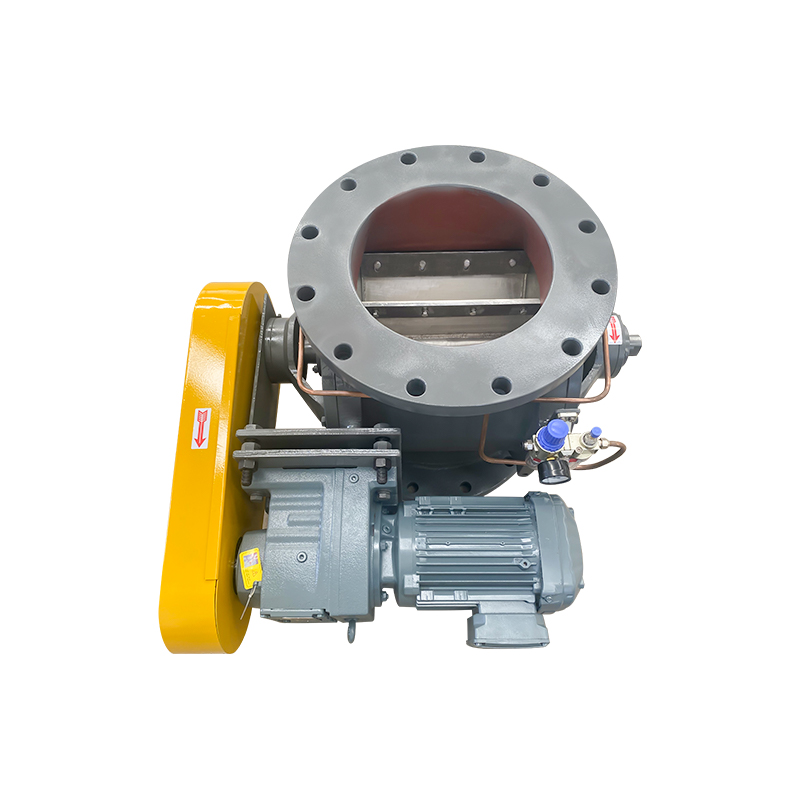
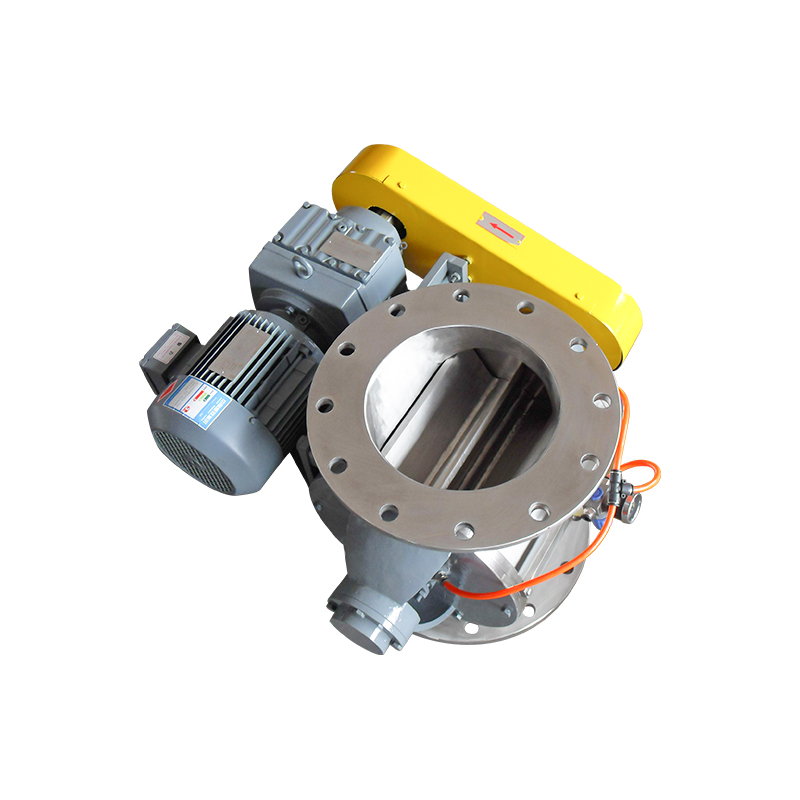
A bayonet-type anti stuck rotary valve does not pretend that jams will never happen. It accepts that they will, and makes clearing one a matter of minutes. The body opens or separates without dismantling the drive or the pipework, so a maintenance technician can reach the rotor, remove the obstruction and restart production within a single shift rather than waiting for a team with lifting gear. On lines where the product changes frequently, or where occasional tramp material is simply unavoidable, that access is worth more than any theoretical improvement in flow.
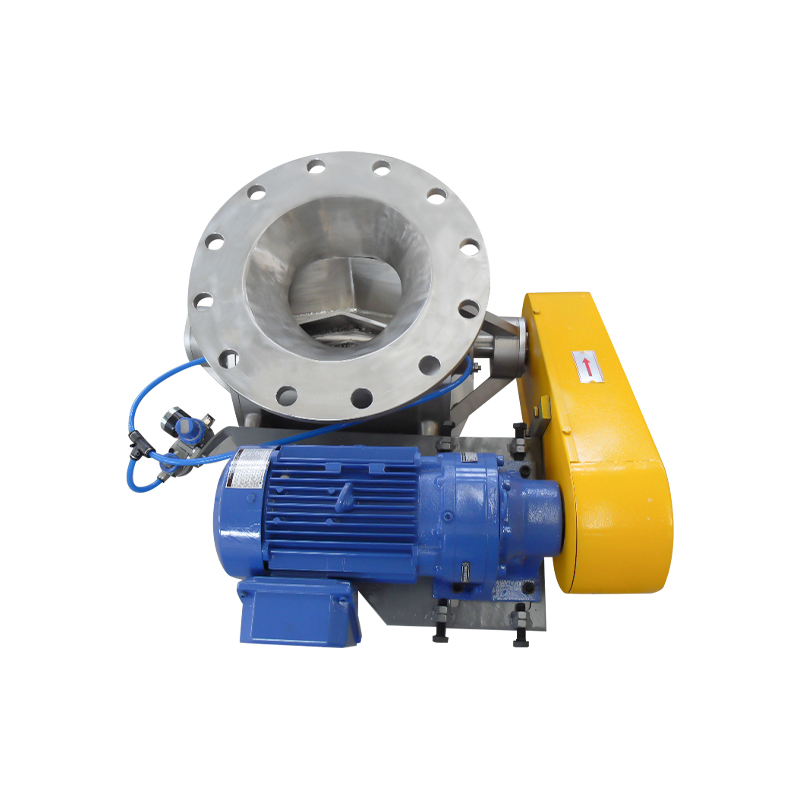
When the inlet sits directly above the rotor pocket, the full head of material presses down into the pocket at the moment it opens. Fine powders compact under that load, and the rotor then has to drag a solid plug through the shear gap. Offsetting the inlet and outlet changes the path the material takes, so the pocket fills progressively rather than being force-fed, and the product no longer travels in a straight line from hopper to pipeline. The result is a lower starting torque and noticeably less impact wear on the rotor edges.
The pocket shape inside the rotor matters more than most people expect. A deep, parallel-sided pocket holds onto sticky or irregular material and carries it around the housing. A V-shaped pocket narrows towards the discharge opening, so material is pushed out rather than simply falling out, and the nip between rotor and housing is reduced. For granular products that contain a small proportion of oversize particles, this geometry is often enough on its own.
None of these three approaches is universally better. The choice depends on whether your problem is occasional bridging, direct impact loading or an awkward particle shape. We explain the mechanics of each in more detail in our note on how anti jamming rotary valves prevent material blockage in conveying lines, which is worth reading before you specify a replacement.
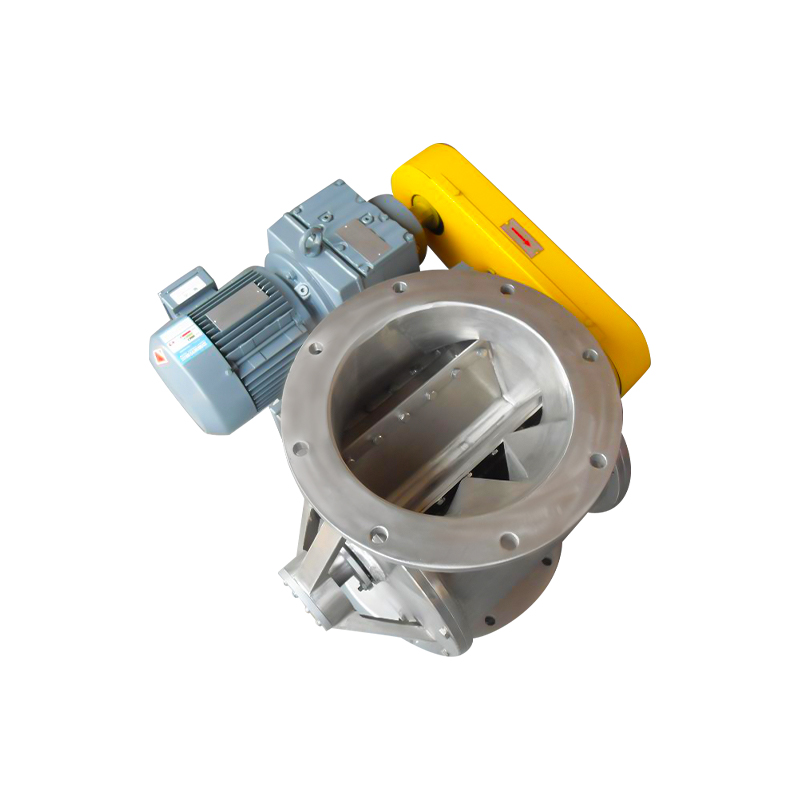
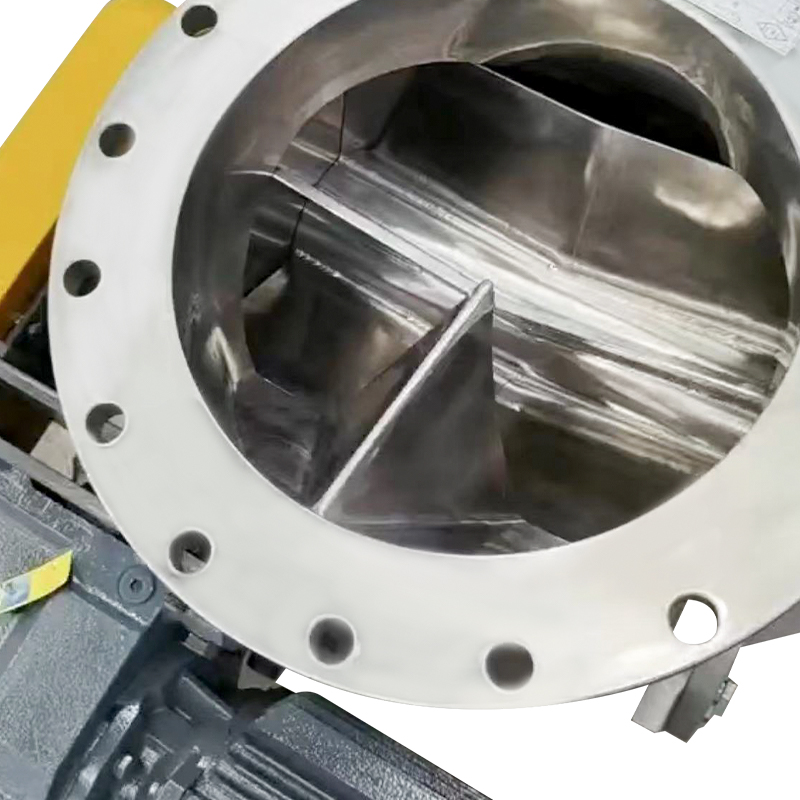 V-Rotor Anti-Stuck Rotary Valve for Conveying LinesV-shaped rotor cavity helps foreign objects exit, reducing jamming risk; relevant when specifying anti-jamming rotary valves for material streams with possible debris.View Product →
A short conversation about your material usually decides the design. The table below summarises the patterns we see most often.
| Material or duty | How it usually jams | Features to look for |
|---|---|---|
| Cohesive or damp powder | Bridges above the rotor and packs into pockets | V-rotor or offset inlet, purging air sweep |
| Fine dust from a bag filter | Flushes through and wears the shear gap | Square-port discharge body in cast or ductile iron |
| Granular product with occasional lumps | A lump wedges at the rotor tip | Reduced nip, V-rotor geometry, fast-access body |
| Abrasive mineral or cement powder | Rotor tips round off, then leakage begins | Wear-resistant build with hardened rotor edge |
| Hot ash or calcined product | Differential expansion closes the clearance | High-temperature construction and bearings |
| Multi-product or sanitary batches | Residue left in pockets and body | Quick cleaning design with full rotor access |
Interface shape belongs to the same decision. A square-port valve bolts directly onto the flat outlet flange found under most bag filters and cyclones, while a round-port valve suits circular pipework. If you are comparing the two, our article on how square port rotary valves improve material flow efficiency covers the flow differences rather than just the bolt pattern.
The hardest working rotary valves we see are usually sitting under a dust collector hopper. The valve has to lock air out of the collection system while dropping a continuous stream of fine ash into a bin or a conveying line. Ash is abrasive, often warm and sometimes slightly damp, which is an unkind combination for any valve.
For this duty, a square-port discharge valve in cast iron or ductile iron is a practical default. The body stays rigid enough to hold its clearances under a tall column of ash, the square flange matches the hopper outlet without an adaptor, and the casting tolerates the abrasion that comes with years of continuous discharge. Where the dust tends to stick, a purging air swept round-port design on the same duty uses a small air flow to keep the pocket area clear.
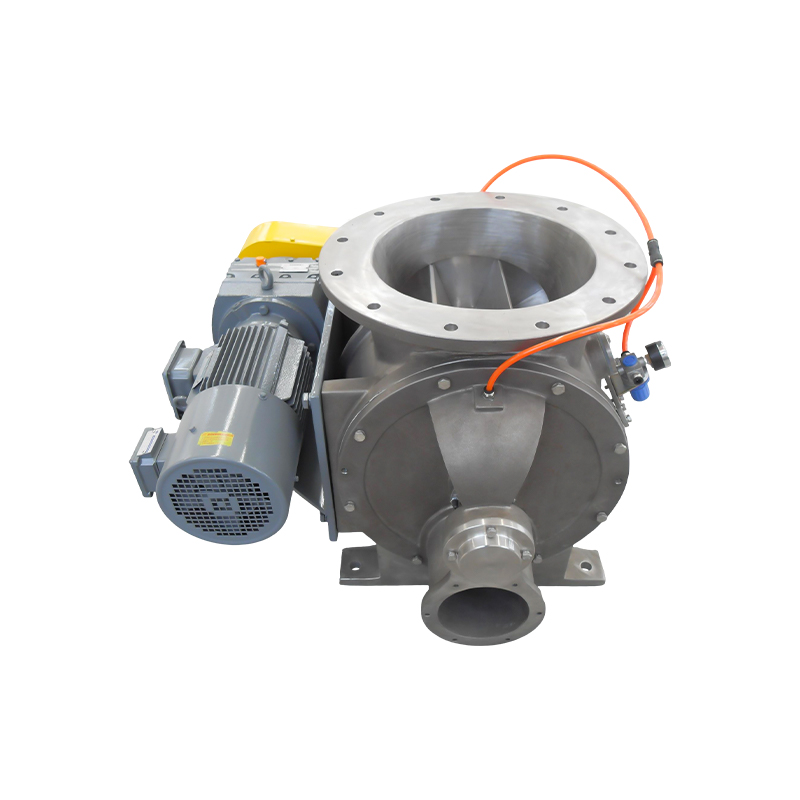
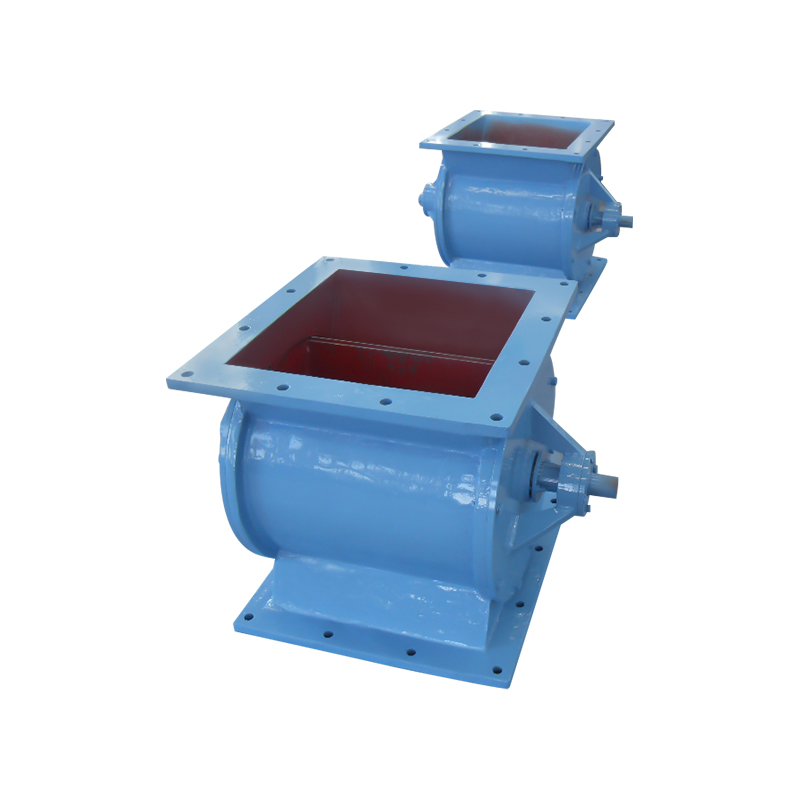 Cast Iron Ductile Iron Square Port Rotary Discharge ValveSturdy square-port discharge valve for conventional to medium-load material transport, commonly used in cement, building materials, power and metallurgy.View Product →
Cleaning comes first in any plant that changes product regularly. In food, pharmaceutical and speciality chemical production, residue left inside a valve is a quality problem, not just a maintenance one. A quick cleaning rotary valve opens fully, and in the sliding-rod version the rotor can be pulled out of the body so that every surface the product touches is accessible for washing and inspection. That turns a job that used to occupy a full day into roughly an hour of work.
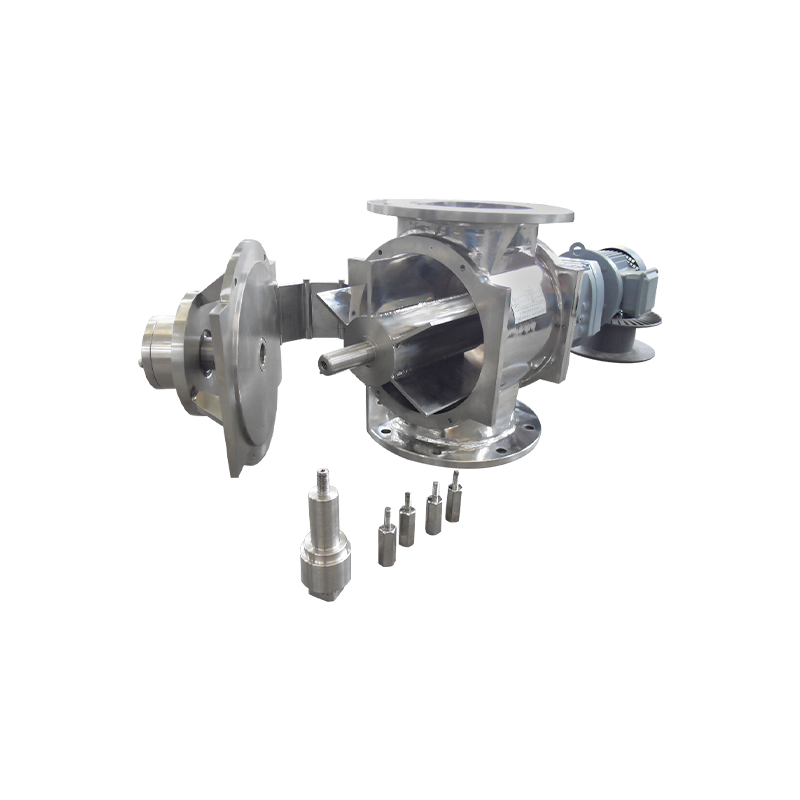 Quick-Opening Fast-Cleaning Rotary Valve for Bulk SolidsCompact ZKQ quick-cleaning valve allows rotor extraction for thorough washing, suited to pharmaceutical, food and fine chemical lines with frequent batch changes.View Product →
Sealing matters just as much. Air leaking past the rotor wastes compressed air and disturbs the pressure balance of the whole system. Mechanical seal and packing seal round-port designs cover most requirements, and when the product is very fine, a purging air connection protects the seal area itself.
Wear and temperature complete the picture. Where the product is hard, a wear-resistant material build with a hardened rotor extends service life considerably. Where the product is hot, high-temperature construction with suitable bearings and clearances keeps the valve turning. Both are normally handled as customised variants, because the right answer depends on the exact product, temperature and duty cycle rather than on a catalogue number.
Five points cover most of what we ask a customer before quoting a valve.
We build rotary valves as a focused business rather than as one item in a long catalogue. Eight series and more than fifty models cover round and square ports, anti stuck geometries, quick cleaning designs, positive pressure feeding, and customised builds for high temperature, large sizes and abrasive materials, and they are working in more than twenty countries. Send us the material, the temperature and a sketch of the connection, and we will tell you honestly which of them suits your line. If none of them does, we will say so. That conversation has been the beginning of most of our long-standing customer relationships, and it is where we would rather start.