

 English
 عربى
عربى
Industry News
Content
- 1 Why Quick Cleaning Rotary Valves Matter in Modern Industry
- 2 How Does a Quick Cleaning Rotary Valve Work?
- 3 Key Industries That Benefit from Quick Cleaning Rotary Valves
- 4 Comparing Standard vs. Quick Cleaning Rotary Valves
- 5 Critical Features to Look for When Selecting a Quick Cleaning Rotary Valve
- 6 Installation and Maintenance Best Practices
- 7 The Long-Term ROI of Investing in Quick Cleaning Rotary Valves
Why Quick Cleaning Rotary Valves Matter in Modern Industry
In industries where hygiene, speed, and operational continuity are non-negotiable, the design of every component in a processing line carries significant weight. Rotary valves — also known as rotary airlocks or rotary feeders — are critical devices used to control the flow of bulk materials between pressure differentials. However, traditional rotary valves often require lengthy disassembly and manual scrubbing during cleaning cycles, leading to costly downtime and increased contamination risks. Quick cleaning rotary valves are engineered specifically to address these shortcomings, offering tool-free disassembly, hygienic design, and faster turnaround between production runs.
The demand for quick cleaning solutions is especially intense in sectors such as food processing, pharmaceuticals, nutraceuticals, and chemical manufacturing, where cross-contamination between product batches can result in regulatory violations, product recalls, or serious health consequences. Quick cleaning rotary valves are not simply a convenience upgrade — they represent a fundamental shift in how industrial operators approach maintenance scheduling, compliance, and total cost of ownership.
How Does a Quick Cleaning Rotary Valve Work?
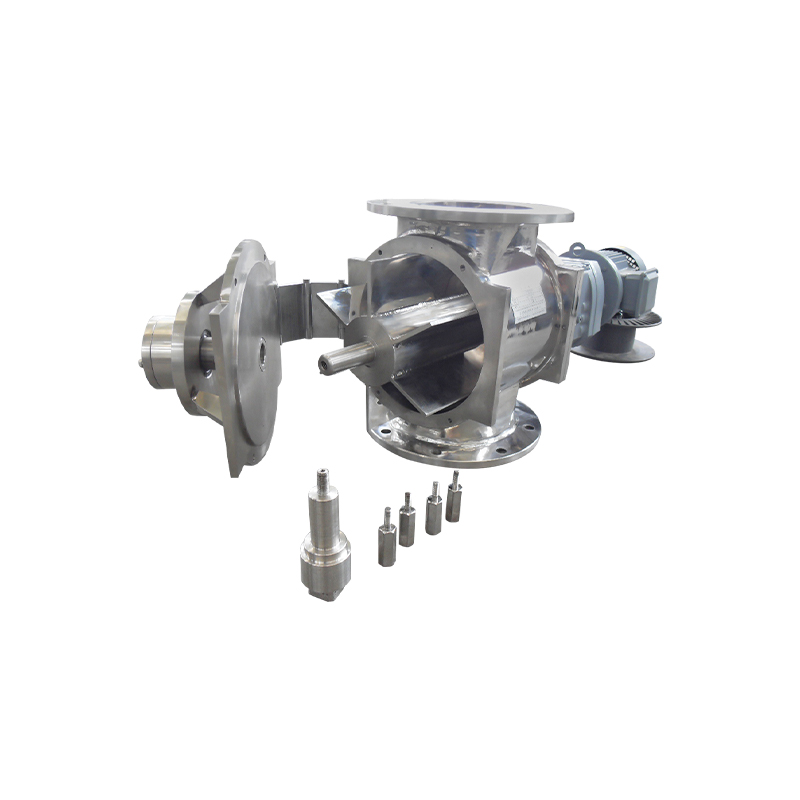
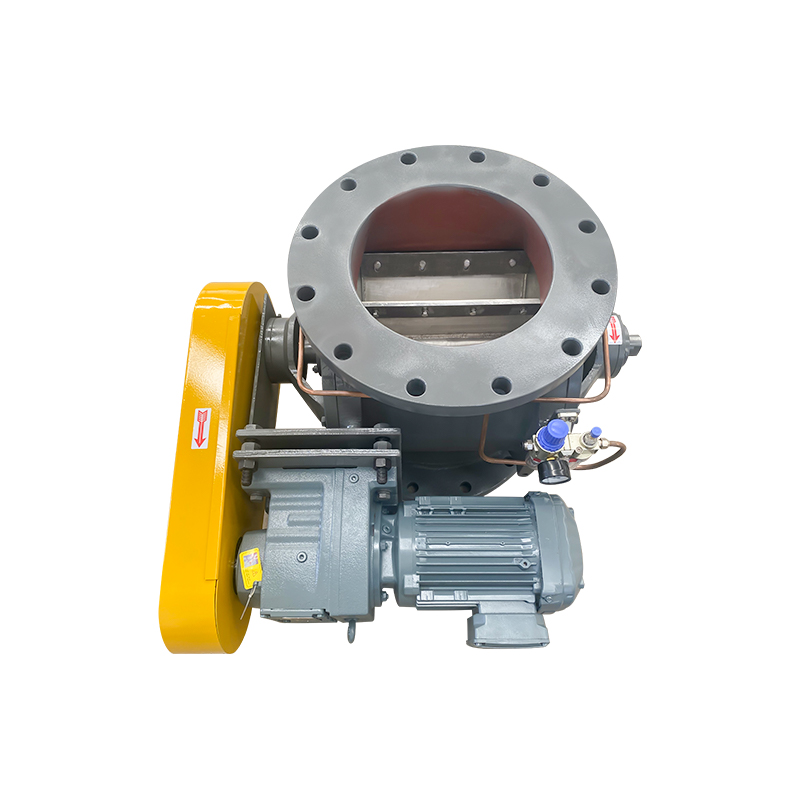
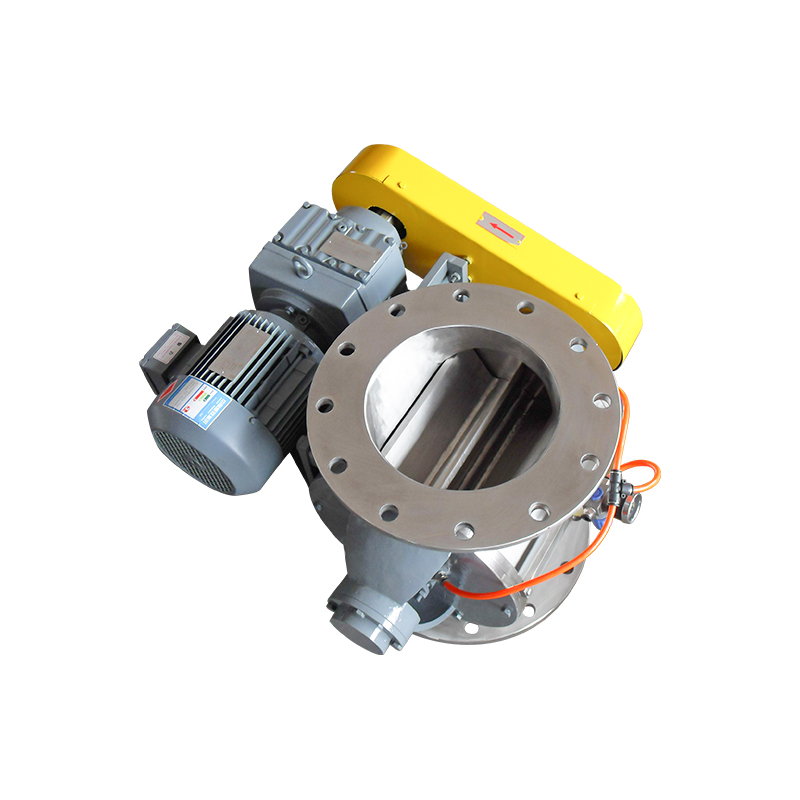
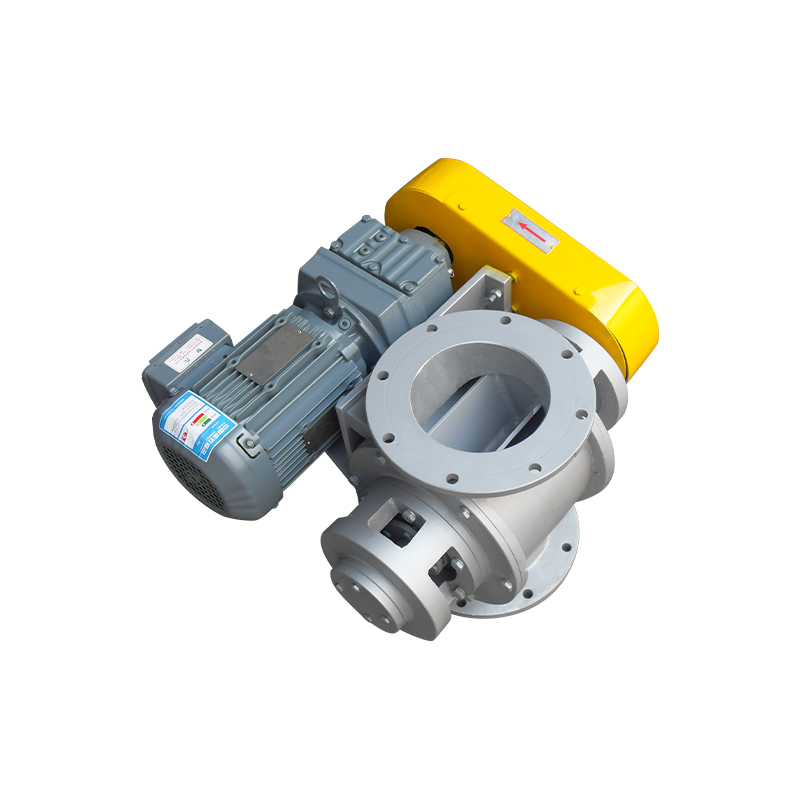
A rotary valve operates by rotating a multi-blade rotor inside a cylindrical housing, allowing measured quantities of bulk material to pass through while maintaining an airlock or pressure seal. In standard valve designs, the rotor must be removed using tools, seals must be pried out, and the housing must be manually cleaned — a process that can take anywhere from 30 minutes to several hours depending on the material being handled and the level of hygiene required.
Quick cleaning rotary valves integrate several design innovations that dramatically accelerate this process:
- Tool-free rotor extraction: The rotor can be slid or pulled out from one or both ends of the housing without using wrenches or specialized equipment, significantly reducing disassembly time.
- Open rotor design: Some models feature open-ended or swept-pocket rotors that prevent material from packing into pockets, which simplifies rinsing and reduces the risk of bacterial growth.
- Sanitary seals and surfaces: Internal surfaces are finished to Ra ≤ 0.8 µm or better, and seals are made from FDA-compliant materials such as EPDM or silicone, enabling thorough cleaning without material entrapment.
- CIP/WIP compatibility: Many quick cleaning rotary valves support Clean-In-Place (CIP) or Wash-In-Place (WIP) protocols, allowing cleaning agents to be circulated through the valve without full disassembly.
Key Industries That Benefit from Quick Cleaning Rotary Valves
While any bulk solids handling operation can benefit from faster maintenance cycles, certain industries have particularly strong incentives to adopt quick cleaning rotary valve technology.
Food and Beverage Processing
Food manufacturers must frequently switch between different products — for example, going from a nut-based powder to a grain-based mix — and allergen control regulations require thorough equipment cleaning between runs. Quick cleaning rotary valves reduce allergen cross-contamination risks and help production facilities comply with FSMA, HACCP, and BRC standards. Facilities handling spices, flour, sugar, cocoa, dairy powders, and similar ingredients gain the most from reduced cleaning times.
Pharmaceutical and Nutraceutical Manufacturing
Pharmaceutical environments demand the highest levels of cleanliness and traceability. Even trace amounts of a previous batch's active pharmaceutical ingredient (API) in a subsequent batch can cause dangerous health effects. Quick cleaning rotary valves designed for pharma use feature electropolished stainless steel internals, zero dead zones, and validated cleaning protocols that comply with GMP and FDA 21 CFR Part 11 requirements.
Chemical and Plastics Processing
In chemical production and plastics compounding, materials can be abrasive, reactive, or hygroscopic. Rapid cleaning becomes important when switching between chemically incompatible materials or when residue from one compound would degrade the quality of the next batch. Quick cleaning designs allow chemical operators to perform rapid changeovers without extended shutdowns.
Comparing Standard vs. Quick Cleaning Rotary Valves
The performance differences between standard and quick cleaning rotary valves become clear when evaluated across several operational criteria:
| Criteria | Standard Rotary Valve | Quick Cleaning Rotary Valve |
| Disassembly Time | 30–120 minutes | 5–15 minutes |
| Tools Required | Yes (wrenches, mallets) | No (tool-free extraction) |
| CIP/WIP Compatible | Rarely | Frequently |
| Surface Finish | Standard mill finish | Electropolished / Ra ≤ 0.8 µm |
| Compliance Suitability | General industrial | Food, pharma, GMP-grade |
| Downtime Per Cleaning | High | Minimal |
Critical Features to Look for When Selecting a Quick Cleaning Rotary Valve
Not all quick cleaning rotary valves are built equally. When evaluating options for your application, the following features should be carefully assessed to ensure the valve meets both your operational demands and hygiene standards.
- Rotor pocket design: Open-sided or swept-back rotor pockets prevent material buildup and make cleaning significantly faster. Closed-pocket rotors may trap powder or granules, requiring more aggressive scrubbing.
- End plate configuration: Quick-release end plates secured with hand-tightened clamps or quarter-turn fasteners allow operators to access the rotor without tools, which is especially valuable in wet cleaning environments.
- Seal material and replacement ease: FDA-approved seals that can be replaced without special tools reduce both cleaning time and seal-related contamination risks. Look for designs where seals are accessible without removing the rotor.
- Material of construction: 316L stainless steel is the standard for hygienic applications. The housing, rotor, and end plates should all be constructed from corrosion-resistant materials compatible with common cleaning agents like caustic soda or phosphoric acid.
- Pressure rating: Ensure the valve is rated for the pressure differential in your system. Quick cleaning models should not compromise structural integrity in exchange for ease of disassembly.
- Inspection certification: For regulated industries, valves should come with material certificates (e.g., EN 10204 3.1), FDA compliance documentation, and optionally 3-A sanitary standards certification.
Installation and Maintenance Best Practices
Even the best quick cleaning rotary valve will underperform if it is not correctly installed and maintained. Following these guidelines ensures you extract maximum value from your equipment investment.
Proper Alignment and Inlet/Outlet Connections
The valve should be aligned vertically beneath hoppers or cyclones to prevent material bridging at the inlet. Connections should be sealed with food-grade gaskets to avoid air leakage, which can reduce metering accuracy and increase dust emissions. Flexible connectors can compensate for minor misalignments while reducing vibration transmission.
Establishing a Documented Cleaning Protocol
Create a step-by-step Standard Operating Procedure (SOP) for each cleaning scenario — dry cleaning, wet cleaning, and CIP. Document the sequence for rotor extraction, rinse temperatures, approved detergents, drying steps, and reassembly torque values (if applicable). Regular operator training against this SOP ensures consistent cleaning outcomes and reduces the risk of reassembly errors that could lead to process contamination or mechanical damage.
Seal and Bearing Inspection Schedule
Even though quick cleaning rotary valves are designed for easy disassembly, operators should establish a scheduled inspection routine for seals, bearings, and rotor tips. Worn rotor tips increase rotor-to-housing clearance, which reduces airlocking efficiency and allows fine powders to bypass the valve. Most manufacturers recommend inspecting seals every 500 to 1,000 operating hours depending on the abrasiveness of the material being handled.
The Long-Term ROI of Investing in Quick Cleaning Rotary Valves
While quick cleaning rotary valves carry a higher initial purchase price compared to standard models, the return on investment becomes apparent when total lifecycle costs are analyzed. Reduced downtime directly translates to more production hours per shift. Faster changeovers allow facilities to run more product SKUs per day, improving manufacturing flexibility without expanding capacity. Fewer labor hours spent on maintenance reduces workforce costs and frees operators for higher-value tasks.
In regulated industries, the cost of a single product recall or a failed inspection far exceeds the price premium of hygienic equipment. Quick cleaning rotary valves reduce the probability of contamination-driven events, providing an insurance-like value that is difficult to quantify but easy to appreciate when it prevents a crisis. For food and pharma manufacturers running multiple daily changeovers, savings of 45 minutes per cleaning cycle can translate to hundreds of additional production hours annually — and a payback period measured in months rather than years.
As processing demands grow and regulatory scrutiny intensifies, quick cleaning rotary valves are becoming a baseline expectation rather than a premium feature. Facilities that upgrade proactively position themselves for greater agility, higher compliance confidence, and improved throughput — all critical advantages in today's competitive manufacturing environment.